
Preparation
A little preparation can prevent damaged boxes, missing hardware, and difficult trips through an overcrowded unit. Start early enough to clean your belongings, gather protective materials, and pack one room or category at a time.
Gather Materials
- Choose Sturdy Boxes: Use clean boxes that can hold their shape when stacked. Avoid weak grocery or liquor boxes, which may be damaged, stained, or more likely to attract pests.
- Gather Packing Supplies Early: Stock up on packing tape, labels, markers, packing paper, bubble wrap, furniture covers, and mattress bags before you begin. We offer a range of packing supplies for purchase at many Trusted locations.
- Use the Right Box Size: Place books, dishes, tools, and other heavy belongings in smaller boxes. Larger boxes work better for blankets, pillows, clothing, and other lightweight items.
- Avoid Overpacking: Boxes should close flat without bulging at the top or sides. An overfilled box is harder to carry and more likely to split or collapse.
Take Inventory
Write down what you place in storage and keep a copy of the list outside the unit. You can also number each box and record its contents in a note on your phone.
Mark boxes that contain seasonal decorations, documents, tools, or other belongings you may need during the rental. These containers should be placed near the front instead of behind large furniture.
Measure and Prepare
Measure furniture, appliances, equipment, and other large items before choosing a unit. A quick list of dimensions can help you estimate the amount of floor space you need and identify pieces that should be disassembled.
- Clean and dry every item before storage. Dirt, food residue, and moisture can lead to odors, stains, mildew, or pest concerns after belongings have been packed away.
Packing Your Unit
Pack the unit with access and stability in mind. Heavy furniture and sturdy boxes should form the base of the layout, while lighter and fragile belongings should remain higher and away from areas where they could be bumped.
- Keep Important Items Near the Front: Place seasonal boxes, documents, tools, and other frequently used belongings close to the entrance. You should not need to unload half the unit to retrieve one container.
- Leave a Small Walkway: Create a narrow aisle through the unit if you expect to visit regularly. A walkway can help you reach boxes and furniture stored toward the back.
- Stack Boxes by Weight: Place heavy, sturdy boxes on the bottom and lighter boxes above them. Keep each stack level and avoid building it higher than you can safely reach.
- Label More Than One Side: Write the box contents and destination room on the top and at least two sides. Labels will remain visible after boxes are stacked together.
- Group Similar Items Together: Keep kitchen supplies, clothing, documents, seasonal decorations, and business materials in separate sections. This makes your inventory easier to follow.
- Use Shelving When Possible: Freestanding shelves can keep boxes organized and reduce pressure on containers at the bottom of a stack. Confirm that each shelf is stable before adding weight.
- Use Furniture Drawers Carefully: Empty drawers can hold linens, clothing, or other lightweight items. Do not fill them with heavy objects that could damage the drawer slides or make the furniture difficult to move.
- Keep a Unit Map: Sketch the unit layout and note where major groups of items are stored. Our blog on organizing a storage unit offers more ideas for maintaining an accessible layout.
Furniture and Appliances
Furniture and appliances need to be clean, dry, and prepared before they enter the unit. Removing shelves, drawers, legs, and other detachable pieces can save space and reduce the chance of damage during loading.
Customers storing wooden furniture, electronics, photographs, or other sensitive belongings should consider climate-controlled storage. These units can provide a more stable environment for materials that may be affected by heat, humidity, or major temperature changes.
Appliances and Electronics
- Drain and Dry Appliances: Empty refrigerators, freezers, washers, dishwashers, and other appliances before storage. Leave appliance doors slightly open so trapped moisture and odors do not build up.
- Keep Appliances Upright: Transport and store refrigerators, washing machines, and similar equipment in their normal upright position. Follow the manufacturer’s instructions before reconnecting them.
- Use Original Electronic Packaging: Original boxes and fitted inserts provide strong protection for televisions, computers, speakers, and gaming systems. When those materials are unavailable, use a sturdy box with protective padding.
- Remove Cords and Accessories: Label cords, remotes, stands, and small parts before packing them together. Take photos of cable connections before disconnecting complicated electronics.
- Do Not Use Appliances as Heavy Boxes: Large appliances may hold clean linens or lightweight fabrics, but avoid packing them with dense or sharp items. Leave enough room for air to circulate.
Sofas, Chairs, and Loveseats
- Clean Upholstery First: Vacuum cushions, seams, and the area beneath removable seats. Make sure the fabric is fully dry before covering the piece.
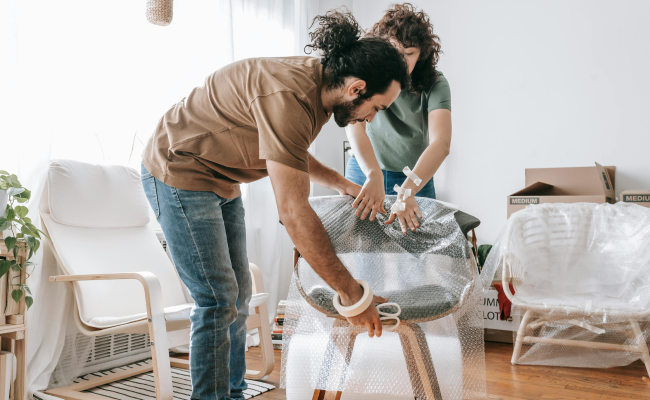
- Use Furniture Covers: Protect sofas and chairs with breathable furniture covers or clean moving blankets. Avoid wrapping upholstery so tightly that moisture becomes trapped.
- Protect Legs and Corners: Add padding around wooden legs, arms, and corners that may be scratched or dented during loading.
- Avoid Heavy Items on Upholstery: Do not stack boxes, tools, or sharp objects on sofas and chairs. Their weight can leave permanent marks or damage the frame.
Tables and Other Furniture
Remove table legs and other detachable pieces when practical. Place screws, bolts, brackets, and assembly instructions in labeled bags, then attach each bag securely to the matching item.
Cover wood surfaces with furniture pads, blankets, or breathable fabric. Avoid placing adhesive tape directly on finished surfaces, since it may leave residue or damage the finish.
Beds and Mattresses
Use a fitted mattress bag to protect against dust and dirt. Store the mattress flat when space permits, or keep it upright with proper support so it does not bend or sag.
- Disassemble bed frames and bundle similar rails together. Keep all hardware in a sealed, labeled bag attached to the frame.
General Tips
Know What Not to Store
Do not place gasoline, propane, fireworks, paint thinner, explosives, or other flammable and hazardous materials inside a storage unit. Drain fuel from lawnmowers, trimmers, snowblowers, and similar equipment before storing them.
Food, pet food, plants, animals, illegal materials, and leaking containers should also remain outside the unit. Perishable products can spoil, create odors, and attract insects or rodents.
Keep Belongings Off the Floor
Use shelves, pallets, or sturdy boards to create separation between boxes and the floor when practical. Make sure the materials you use are stable and do not create a tripping hazard.
Plan for Future Visits
Update your inventory and unit map whenever you add or remove belongings. Return boxes to their original section so the unit remains organized throughout the rental.
Prepare for Moving Day
- Pack an accessible bag with a box cutter, tape, gloves, cleaning supplies, basic tools, and any paperwork needed at the facility. More planning ideas are available in our moving preparation tips..
Find Storage at Trusted Self-Storage
Trusted Self-Storage offers options for moves, household overflow, seasonal belongings, business materials, vehicles, and other changing space needs. Explore our personal storage options, then find a nearby facility through the Trusted Self-Storage locations page.